History
Tiki Bars: How a Fake Polynesia Conquered America
An invented aesthetic, built by a bootlegger-turned-restaurateur, that outlasted almost every trend it inspired.
9 min read · All guides
A bar that opened the year Prohibition ended
Don the Beachcomber opened in Hollywood in 1933, the same year the Twenty-first Amendment repealed Prohibition, and the timing wasn't a coincidence so much as an opportunity. Its founder, Ernest Raymond Beaumont Gantt, had spent his Prohibition years reportedly smuggling rum through the Caribbean and the South Pacific — the exact biography is disputed and partly self-mythologized, which fits the whole tiki project perfectly. When the ban lifted, he had rum connections, sailor's stories, and no legal bar yet to put them in.
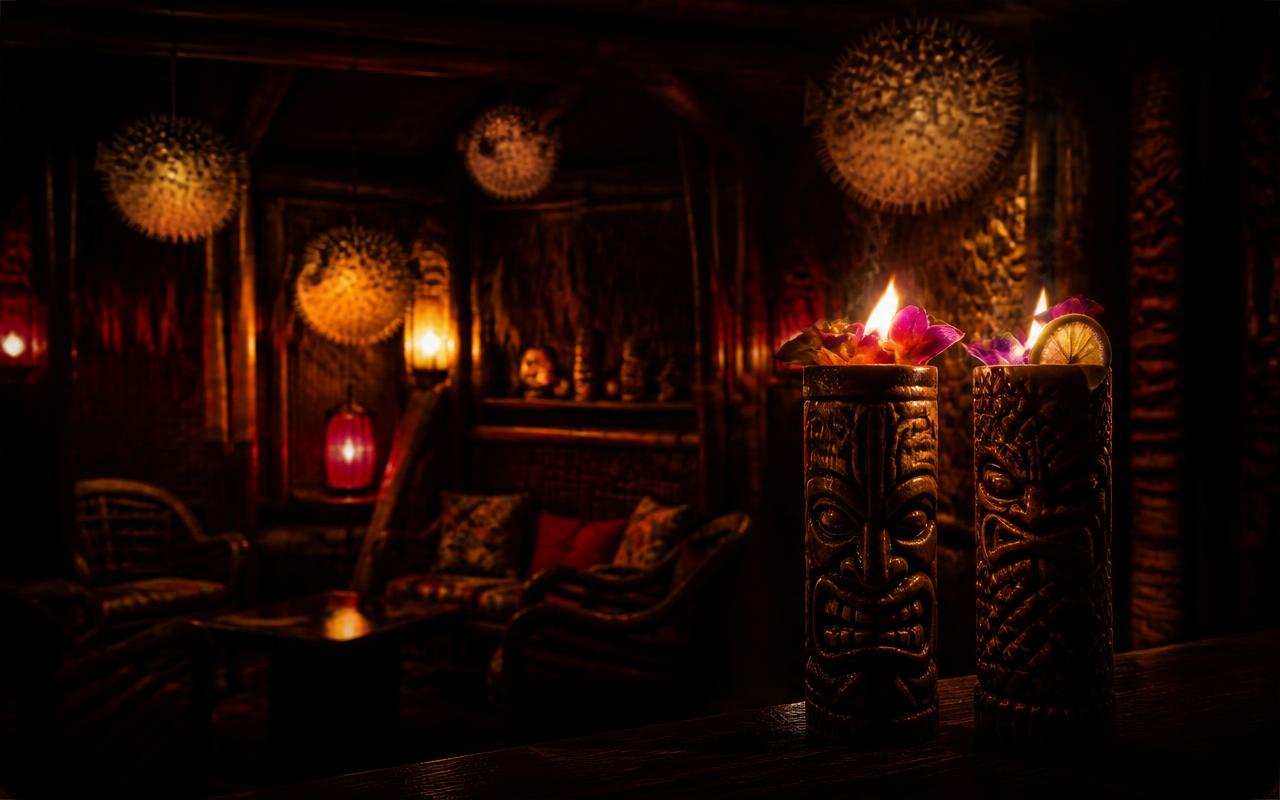
The room he opened had almost nothing to do with actual Polynesian culture and everything to do with a mood: bamboo, carved wooden idols, ship lanterns, fishnets, and a menu of rum drinks with invented names and deliberately obscured recipes. Gantt would later legally change his own name to Donn Beach, folding himself entirely into the persona.
Trader Vic and the rivalry that built the genre
Victor Bergeron, a Bay Area bar owner running a room called Hinky Dink's, visited Don the Beachcomber, saw what was working, and rebuilt his own bar as Trader Vic's within a few years. The two men spent decades disputing who actually invented the Mai Tai — Bergeron's version, created in 1944 using aged Jamaican rum, orgeat, orange curaçao and lime, is the one that survived into the modern canon, though Beach had been serving his own rum-heavy drinks under different names for over a decade by then.
The rivalry mattered because it turned tiki into a genre rather than a single bar's gimmick — two competing, expanding chains, each guarding secret recipe codes for their bartenders so that competitors couldn't simply copy the drinks, which is part of why so many original tiki recipes are still being reverse-engineered by cocktail historians today.
Why it fit postwar America so well
Tiki's real boom came after World War II, when large numbers of American servicemen returned from the Pacific theater with an appetite for the imagery, however inaccurate, of the islands they'd been stationed near. Combined with cheap air travel expanding after the war and a general mid-century American fascination with an imagined, escapist 'exotic,' tiki bars offered a full evening's vacation from a suburban Tuesday without leaving the city.
The aesthetic was, by any honest accounting, a pastiche — Hawaiian, Polynesian, Caribbean and vaguely Asian elements blended with no particular concern for accuracy or origin. Modern tiki bars and cocktail historians have spent the last two decades reckoning openly with this, and the better contemporary rooms now credit the actual rum-producing regions and techniques their drinks draw from rather than leaning on the invented mid-century mythology alone.
The crash and the long dormancy
Tiki's decline through the 1970s and 80s tracked a broader shift in American taste toward what critics saw as more 'authentic' dining and drinking experiences, alongside changing travel patterns that made the real Pacific more accessible and the fantasy version less necessary. Many original tiki rooms closed or were gutted for other uses; a number of irreplaceable carved bar fixtures and rare tiki mugs were simply thrown away in the process, a loss that collectors and bar historians still lament.
What kept the form alive at all through its dormant years was a small, dedicated collector culture — people buying up vintage tiki mugs, menus and matchbooks at flea markets and swap meets through the 1990s, long before there was any commercial revival to justify it.
The modern revival
Tiki's return began in earnest in the early 2000s, driven substantially by bartender and author Jeff Berry's research into original Don the Beachcomber and Trader Vic recipes, published in books that finally cracked many of the deliberately coded original formulas. Modern rooms like Smuggler's Cove in San Francisco and Lost Lake in Chicago rebuilt the genre with a stronger emphasis on rum quality and recipe accuracy than most of the mid-century originals ever had, while keeping the maximalist room design that made the whole thing fun in the first place.
What makes tiki's revival different from most retro trends is that it never really tried to disguise its own artificiality — a good modern tiki bar knows exactly how invented its own mythology is, and leans into the theater precisely because everyone in the room is in on the joke together.
Questions
- Who really invented the Mai Tai?
- Both Don the Beachcomber and Trader Vic claimed it, and the dispute was never definitively settled. Trader Vic's 1944 version, made with aged Jamaican rum, orgeat, curaçao and lime, is the one that became the standard.
- Is tiki culture considered appropriative today?
- Many contemporary bar historians and tiki bar owners acknowledge the genre's original imagery was an inaccurate pastiche, and better modern rooms now credit real Caribbean and Pacific rum traditions rather than relying solely on the invented mid-century mythology.
Styles in this guide
The Gear Room
Read on, drink on
Smuggler's Cove: Exotic Cocktails & Tiki
The definitive tiki text: rum categories, syrups, and why your mai tai tastes wrong.
Tiki Cocktail Kit
Orgeat, falernum and grenadine — the three syrups every tiki drink secretly depends on.
Ceramic Tiki Mugs
Opaque on purpose: the drink is a secret, the vessel is the show.
Links go to Amazon. We may earn a commission on purchases at no extra cost to you.