History
A Short History of the American Speakeasy
How a constitutional amendment created an entire architecture of secrecy, and why it never fully went away.
9 min read · All guides
A dry law nobody wanted enforced
The Eighteenth Amendment banned the manufacture, sale and transport of alcohol starting in January 1920. It did not ban drinking, buying alcohol for personal use, or keeping what you already owned — a legal seam wide enough that plenty of well-off Americans simply stocked their cellars in the run-up to the deadline and drank legally purchased liquor for years afterward. For everyone else, the law created instant demand for an entire underground industry that hadn't needed to exist the week before.
Enforcement was chronically underfunded from the start. The Volstead Act's federal budget for Prohibition agents was a fraction of what serious enforcement would have required for a country this size, and local police forces — many of whom drank themselves, and many of whom were paid off — had little appetite for it. The result wasn't a dry country. It was a country that moved its drinking behind closed doors and largely got away with it.
From saloon to speakeasy
Before Prohibition, New York alone had roughly 15,000 licensed saloons. Within a decade of the ban, estimates put the number of illegal drinking establishments in the city at over 30,000 — the demand didn't shrink, it multiplied, because the low barrier to opening an illegal bar (a back room, a supplier, a lookout) was far lower than the licensing and taxation that had constrained legal saloons.
The word itself is older than Prohibition — 'speak softly shop' and 'speakeasy' were both in use in the 1880s to describe unlicensed drinking establishments in places like Pittsburgh, where the term is often traced to a bar owner who told patrons to keep their voices down so as not to attract attention from the street. Prohibition didn't invent the word. It made it a household one.
The mechanics of hiding a bar
The physical vocabulary of the speakeasy — a peephole in a heavy door, a password changed weekly, a bar built behind a legitimate front business — developed because it worked at exactly the level of enforcement Prohibition actually got. A raid required a warrant or probable cause; a lookout at street level bought a room enough time to hide bottles and clear the bar before officers reached the door. Basements and back rooms were preferred not for atmosphere but because they had fewer windows and one controllable entrance.
Supply was the harder problem than concealment. 'Rum row,' the line of smuggling ships anchored just past the three-mile territorial limit off the East Coast, supplied speedboats running cargo ashore at night, while industrial alcohol diverted and re-distilled from paint and fuel supplies filled in the rest — a practice that killed an estimated ten thousand people over the course of Prohibition when the federal government began deliberately poisoning industrial alcohol supplies to discourage diversion, and bootleggers kept selling the poisoned product anyway.
Who ran the rooms
Organized crime's association with speakeasies is not mythology — Al Capone's Chicago operation and various New York syndicates financed and protected large numbers of the country's illegal bars, and the profits from Prohibition-era bootlegging substantially built the American organized crime infrastructure that outlasted the amendment itself by decades. But plenty of speakeasies were much smaller and more mundane: a widow renting out her parlor on weekends, a pharmacist quietly overprescribing 'medicinal' whiskey, a hotel bar that simply kept operating with a wink from local police.
Women's presence in speakeasies marked a genuine social shift from the saloon era, when respectable women rarely drank in public bars at all. Speakeasies, being illegal to begin with, had little institutional reason to enforce the old social codes, and mixed-gender drinking rooms became normalized during Prohibition in a way that stuck permanently after repeal.
Repeal and the long afterlife
The Twenty-first Amendment repealed Prohibition in December 1933, driven less by moral reconsideration than by the Depression-era argument that legal, taxed alcohol sales would create jobs and revenue the country badly needed. Only a handful of the thousands of Prohibition-era rooms made the transition into legal operation and are still pouring today, which is why 'Prohibition original' is treated as a distinct, verifiable category on this trail rather than a marketing term.
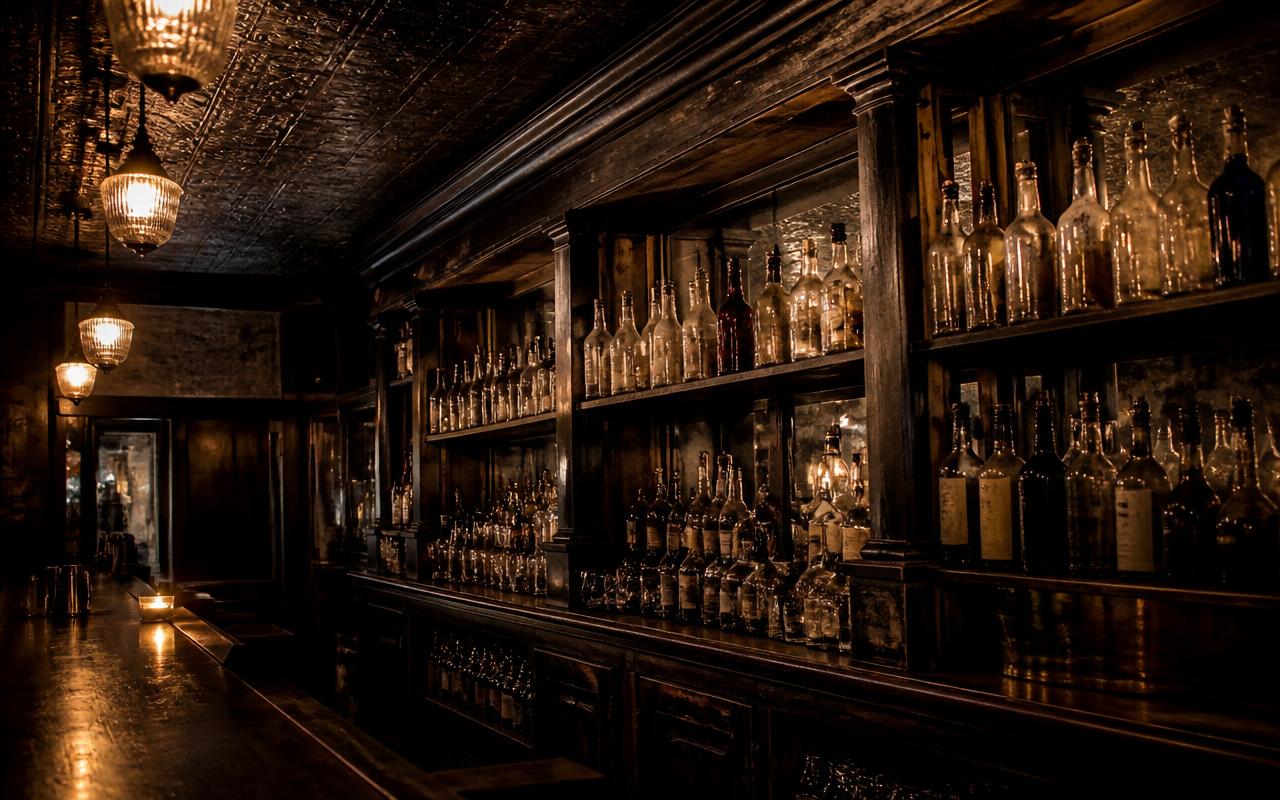
What survived far more broadly than any individual bar was the aesthetic — and the excuse. The idea of a bar you have to know about, reached through an unmarked door, remains commercially potent a century later precisely because it recreates a feeling — of being let in on something — that Prohibition manufactured out of simple necessity and that modern bars now build on purpose.
Questions
- Did Prohibition actually reduce drinking in America?
- Consumption dropped in the earliest years, largely from higher prices and reduced access, but rebounded significantly by the late 1920s as the illegal supply chain matured.
- Why did women's role in bar culture change during Prohibition?
- Because speakeasies were already operating outside the law, they had little institutional incentive to enforce the pre-Prohibition norm against women drinking in public bars, and mixed-gender speakeasies became common and largely stuck after repeal.
Styles in this guide
The Gear Room
Read on, drink on
The Savoy Cocktail Book
Harry Craddock's 1930 compendium, written while America was dry and London was not.
Imbibe! — David Wondrich
The best history of the American bar before Prohibition closed it. Jerry Thomas as protagonist.
Last Call: The Rise and Fall of Prohibition
How a country talked itself into the dry years, and how it climbed back out.
Links go to Amazon. We may earn a commission on purchases at no extra cost to you.